
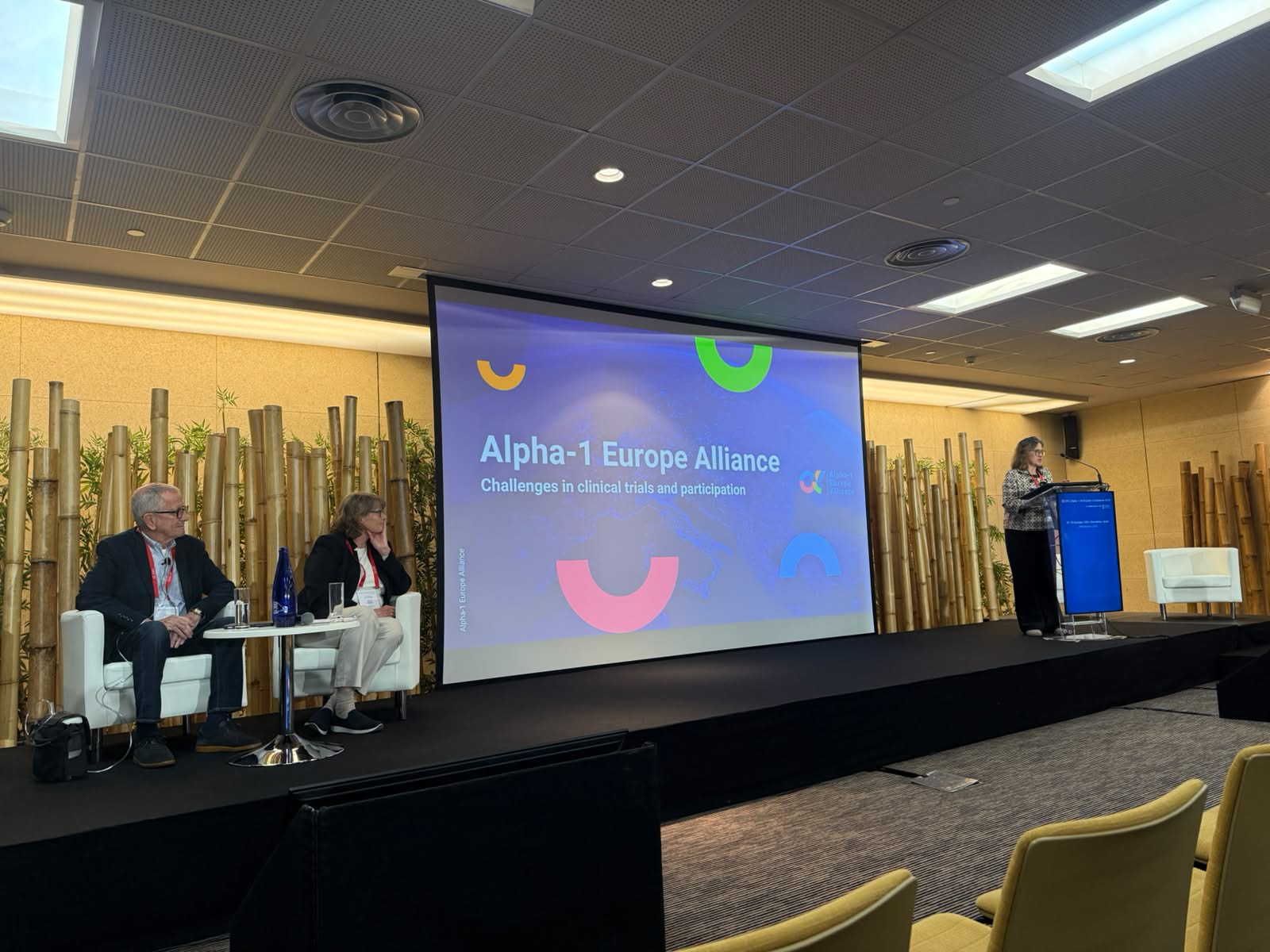
Research into alpha-1 antitrypsin deficiency (AATD) is moving faster than ever, and patients are making sure their voice moves with it. At the first ERS Alpha-1 Antitrypsin Conference 2026, held in Barcelona on 23-24 October, Fernanda Aspilche Ferro, President of Alpha-1 Europe Alliance (A1EA), spoke on the patient panel about turning participation in clinical trials into true partnership. Drawing on her own experience, her message to researchers was clear: involve patients from the very beginning.
The conference was organised by the European Respiratory Society (ERS) in collaboration with the European Alpha-1 Research Collaboration (EARCO) and endorsed by the European Reference Network on rare respiratory diseases (ERN-Lung). Over two days it brought together pulmonologists, hepatologists, laboratory scientists, geneticists, researchers, industry representatives and patient advocates.
The programme covered circulating AAT polymers, the pathogenicity of rare variants, AATD-associated liver disease, new EARCO findings, diagnosis and follow-up strategies, and emerging treatments. Among the latter are DNA and RNA editing and small interfering RNA therapies. This matters because augmentation therapy, the only specific treatment for AATD-related lung disease, has not significantly changed in more than 30 years.
A panel built on partnership
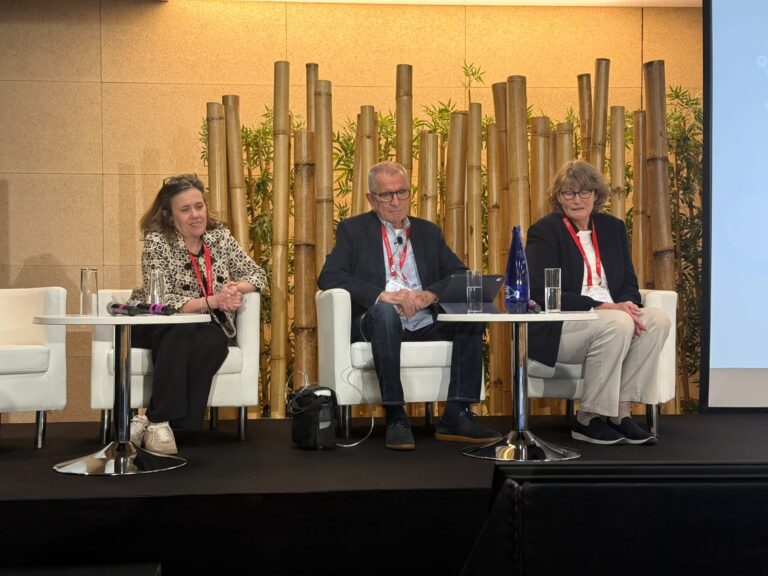
Fernanda spoke on the patient panel alongside three fellow advocates: Karen O’Hara, A1EA board member and Chair of Alpha-1 UK; Marion Wilkens, Chair of Alpha-1 Deutschland; and Alfonso Viñuela, patient representative from Spain.
Karen and Marion reflected on the beginnings of EARCO and the value of patient representation within it. Their message was that trust and lasting partnership grow when patients and researchers work side by side.
"I believe that, thanks to EARCO, we have made important steps towards bringing patients and researchers closer together. We have shown that patients are not just participants in research, but partners who bring valuable expertise from their lived experience. We are building trust, creating opportunities for meaningful patient involvement, and making sure that the questions we ask reflect what really matters to patients. And I believe that, together, we can make Alpha-1 research more relevant, improve care, and give patients a stronger voice in shaping the future."
Marion Wilkens, Chair of Alpha1 Deutschland
"It is also encouraging to see that both a deeper understanding of the underlying disease mechanisms and natural history, as well as the development of new therapies, have their place in research. Together, they give us patients hope for new treatment options in the future."
Marion Wilkens, Chair of Alpha1 Deutschland
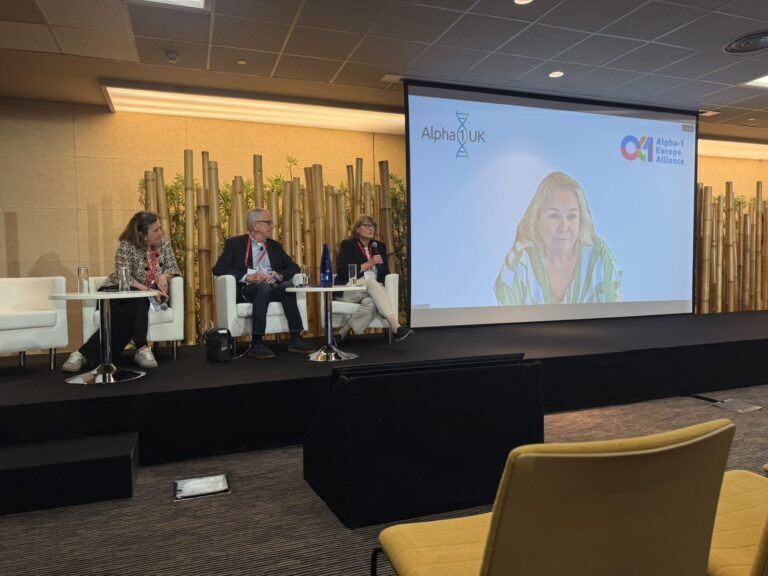
Alfonso shared his path to diagnosis with honesty and warmth. His story reminded the audience that behind every diagnosis there is a person, a family and a life changed.
"Patients bring valuable lived experience and unique perspectives that can help researchers identify meaningful research questions, improve study design, and ensure that findings are relevant, accessible and applicable to real-world healthcare. Meaningful patient involvement promotes inclusivity, strengthens trust between researchers and the patient community as a whole, and helps ensure that diverse voices are heard throughout the research process. Ultimately, involving patients as active partners, rather than simply participants, supports more ethical, effective and patient-centred research, with the potential to improve healthcare services, outcomes and importantly quality of life. Thanks to EARCO, we demonstrate how collaboration between researchers and patients can add significant value to research, ensuring it is more relevant, inclusive, and responsive to the needs and priorities of the people it aims to benefit."
Karen O'Hara, Chair of the Alpha-1 UK
“Involve us from the beginning”
Drawing on her own experience as a patient, Fernanda spoke about participation in clinical trials. Her central message was that patients should be involved from the very beginning, while the questions, protocols and practical arrangements are still being shaped.
Her presentation, “Challenges in clinical trials and participation”, began with why the patient voice matters now. Regulators and health technology assessment bodies increasingly expect patient input at every stage of a development process that can take up to 18 years. A1EA is now officially recognised by the European Medicines Agency (EMA) as an eligible patients’ and consumers’ organisation, which strengthens its ability to make sure patient perspectives are heard in discussions on trials and medicines.
She also described the realities that shape who can take part in a trial and how:
- Unequal access. Patients enter trials with different baseline standards of care, which affects trial design, comparators and equity.
- A small population. AATD is a rare disease with few eligible patients, slow progression, long observation periods and several trials competing for the same participants.
- The reality of participation. Beyond the protocol, practicalities, risks, time, independence and clarity all matter, as does the emotional investment patients make when they place their hope in a trial.
“Patients bring practical expertise to trial design. We know which outcomes reflect real benefit, whether the visits and tests are manageable, what risks are acceptable, and whether a study reflects life with fatigue and breathlessness. We also know whether a trial is accessible when it means travelling far or across borders.”
Fenanda Aspilche Ferro, President of Alpha-1 Europe Alliance
A five-point proposal
Fernanda closed with concrete proposals from A1EA to the research community:
- Involve patients earlier, at the research-priority and protocol-design stage and not only at recruitment.
- Connect patients with independent AATD clinical experts, and not only contract research organisations, for unbiased guidance.
- Communicate long-term commitments clearly, including duration, randomisation, placebo follow-up and post-trial access.
- Support earlier, ethical diagnosis and appropriate genetic testing, so that more people can access care and, where appropriate, research.
- Close the loop by reporting results back to the community that made the research possible.
“Please give us a seat at the table early enough to help shape what happens around it,” she concluded.
Hope from the room
For Fernanda, the breadth of the science on show was as striking as the dialogue. “Hearing about the breadth of Alpha-1 research and the new therapeutic approaches being explored was deeply encouraging,” she said afterwards. “There is still much to learn, but seeing so many people dedicate their expertise and energy to our future gave me real hope.”
That optimism ran through her closing message. Patients, she stressed, are not just participants but partners. AATD research has never been more promising, and the research community can count on the patient community.
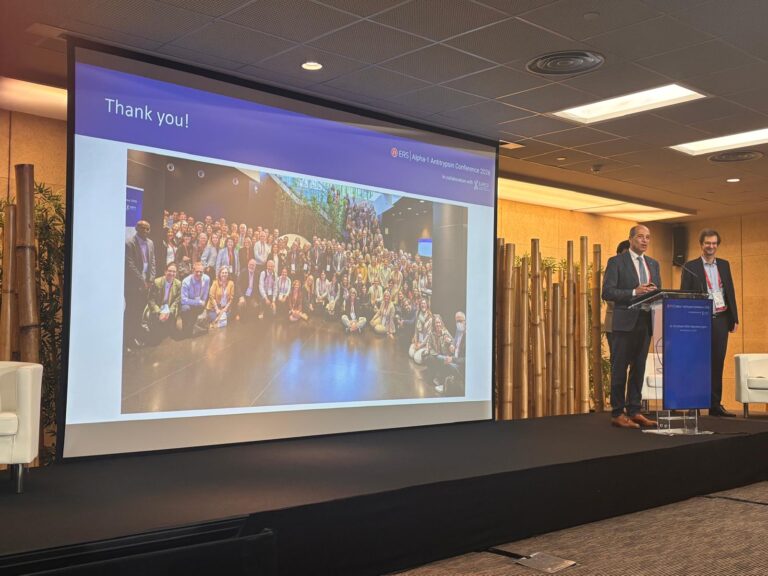
A1EA warmly thanks the European Respiratory Society, EARCO and the conference organising committee for the invitation and for putting patient experience and engagement at the heart of the programme. We also thank Dr Miriam Barrecheguren Fernandez, Prof. Dr Didier Cataldo, Dr Christian Clarenbach, Prof. Dr Marc Miravitlles, Dr Alice Turner and Mrs Marion Wilkens for creating a space where clinicians, scientists and patients could exchange knowledge as equals.
We also thank every clinician, researcher, industry colleague and advocate working to advance Alpha-1 care. For those of us living with this condition, your work carries enormous meaning.
This conference showed what is possible when patients and researchers build the future together. A1EA is ready to keep that collaboration going, in trial design, in research priorities and in sharing results. If you are working on AATD research and would like to involve the patient community, we would be glad to hear from you.
