
On 4 November 2026, the European Lung Foundation (ELF) hosted a webinar on alpha-1 antitrypsin deficiency (AATD), bringing together people living with the condition, clinicians, researchers and patient organisations from across Europe. The session sent a clear and encouraging message: progress in AATD is strongest when patients get involved and help to shape it.
The webinar was developed in partnership, with contributions from the European Alpha-1 Research Collaboration (EARCO), the Alpha-1 Europe Alliance (A1EA), national Alpha-1 patient associations – including Alpha-1 UK and Alpha1 Deutschland e.V. – and ELF itself. That collaborative approach was reflected throughout the programme, which combined scientific insight with the lived experience of the AATD community.
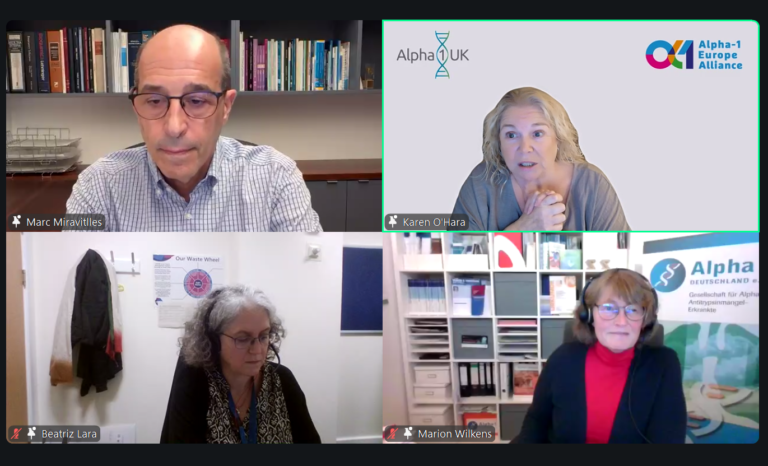
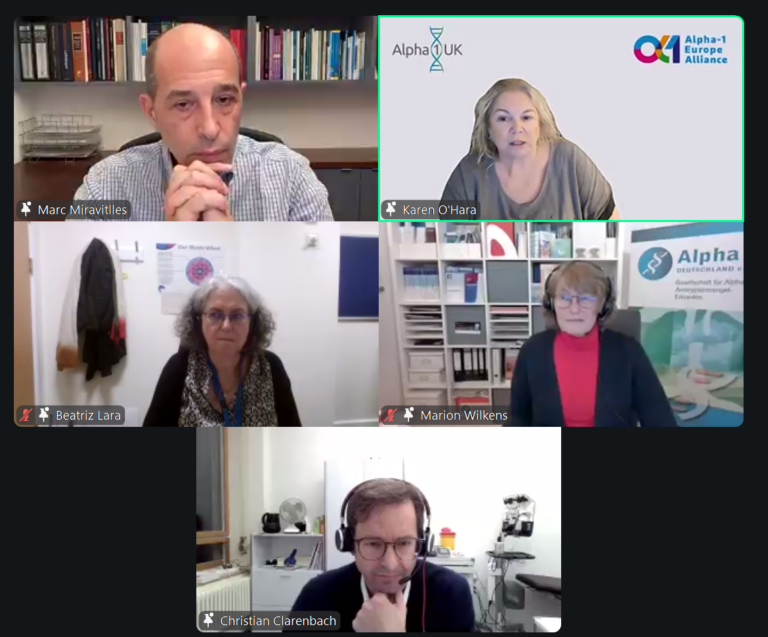
The event was moderated by Karen O’Hara, representing Alpha-1 UK, A1EA and EARCO, and Dr Beatriz Lara, consultant in Respiratory Medicine at University Hospitals Coventry and Warwickshire NHS Trust and EARCO Early Career Member and Patient Advocacy. Together they guided participants through three presentations covering the European research landscape, the latest scientific developments and the role of patients in driving research forward.
"The response exceeded our expectations, with nearly 500 people registering and 280 joining us online. It was a lively, informative session, and the questions in the chat showed how engaged and curious our community is. It's a great example of how active patient involvement can be."
Karen O'Hara, Alpha-1 UK, Alpha-1 Europe Alliance and EARCO
Research, innovation and patient involvement in focus
Introducing EARCO
Professor Christian Clarenbach, co-chair of EARCO (University Hospital Zurich), presented EARCO (European Alpha-1 Research Collaboration), a multidisciplinary, international network of clinicians, laboratory and genetics specialists, hepatologists and patient representatives, endorsed by the European Respiratory Society, committed to promoting clinical research and education in alpha-1 antitrypsin deficiency (AATD). Its registry, which links national registries so that people with a AATD can be studied beyond borders, now holds data on more than 5,000 people from 129 open sites. Annual follow-up already spans up to six years for some participants, building a clearer picture of how AATD evolves.
“Our aim is to deliver high-quality, patient-oriented research, so patient input is crucial. Patient representatives have been involved in EARCO from the very beginning. They advise us and help us think about the research studies and topics we should tackle.”
Professor Christian Clarenbach, EARCO
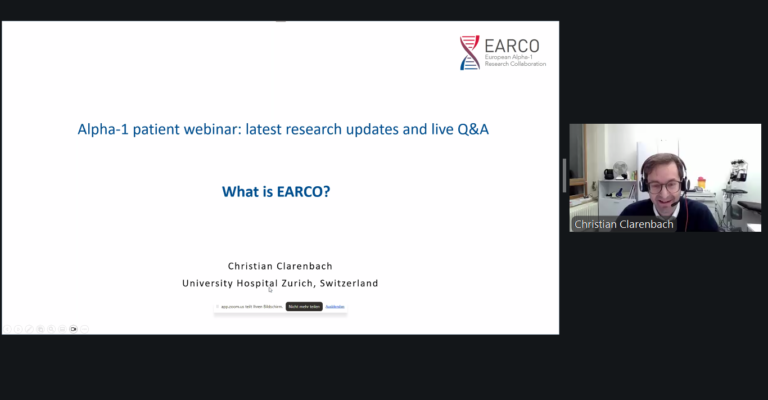
Looking ahead, a third phase planned for 2027–2029, for which funding is being secured, aims to add CT imaging data, harmonised blood sample collection and exchanges for early-career clinicians.
AATD Research update
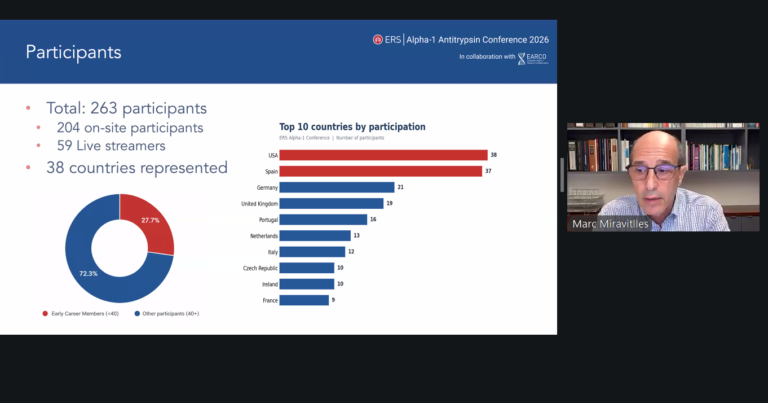
Dr Marc Miravitlles, Chair of EARCO (Vall d’Hebron University Hospital and Vall d’Hebron Research Institute), shared highlights from the ERS AATD Congress held in Barcelona, which brought together more than 200 on-site participants from 38 countries, almost a third of them early-career researchers and clinicians. Augmentation therapy has long been the only treatment option, he noted, but several new approaches are now in development: a recombinant alpha-1 given every three weeks, an oral treatment taken twice a day, small-molecule correctors, and DNA and RNA editing therapies designed to help the liver produce normal alpha-1 protein. He was clear that these remain in clinical trials, that long-term safety data are still limited, especially for gene editing, and that trial participation by patients is essential.
“These are very interesting alternatives that are now being tested in patients in clinical trials, and the future we expect for the treatment of alpha-1 antitrypsin deficiency is really bright. I cannot tell you how many years it will take. I hope it will not be long, and it will be a different pace for each of them. But I am sure that, in the near future, there will be more options that can provide better outcomes for our patients and for our community.”
Dr Marc Miravitlles, Chair of EARCO
Finding support and shaping research
Marion Wilkens, Chair of Alpha1 Deutschland e.V. and a patient representative on the EARCO steering committee, reminded participants that living well with AATD is “not only about medicines”. She pointed to the support available through the Alpha-1 Europe Alliance and its national member organisations, and to ELF’s new Alpha-1 Patient Advisory Group, where people can share their experience, help develop information for other patients and contribute to research projects.
“We think our voice matters. Wherever you are looking for support, more information or ways to get involved in research, there are people and organisations ready to connect with you. We have many organisations across Europe, so please reach out and ask your questions. Share your experience as well, because this helps us bring a better experience back to patients and helps to shape the future of research.”
Marion Wilkens, Chair of Alpha1 Deutschland
Better research starts with partnership
The webinar was a timely reminder that research and innovation in rare diseases rely on more than data and laboratories. They depend on people: those who live with AATD every day, the clinicians who care for them and the scientists working to understand the condition better. When patients are involved from the start, research questions become more relevant, studies become easier to take part in and results are more likely to reflect what truly matters to the community.
We are grateful to the European Lung Foundation for inviting us to take part in this webinar, and to EARCO, national Alpha-1 patient associations, the moderators and all the speakers for their time and expertise. We look forward to continuing this collaboration with ELF, EARCO and all our partners, so that the voices of people living with AATD continue to be heard in research, in care and in the decisions that affect them.
